"A service alarm kept flashing and I almost cleared it. He told me to photograph it first, then matched the code to my exact model and paired it with temperature readings. The code was a clue, not the whole story."
Gerald M., BlackhawkSub-Zero diagnostics for Danville built-ins
4.9 / 5 average rating700+ customer reviews across platforms
Sub-Zero alarms are clues, not a universal parts chart
An alarm on a Sub-Zero display can be useful, but it should not be treated as a one-size-fits-all code chart. Model family, compartment temperature, recent door activity, power history, fan behavior and sensor readings all matter. This Danville guide explains how to preserve alarm evidence, what to photograph and why clearing the code before intake can make the visit less precise.
Local Danville Sub-Zero repair base with same-day routing when schedule, access and required parts allow.
Why is my Sub-Zero showing an error code or alarm in Danville?
Sub-Zero alarms are read by model and serial, not a generic numeric chart. The same flashing "Service" light or "Vacuum Condenser" reminder can mean different things across families. Danville Sub-Zero Repair photographs the display, logs fresh-food and freezer readings, then verifies by model in Blackhawk and 94506 before any board. Call (925) 940-3576.
Photograph the code before resetting and call Danville Sub-Zero Repair at (925) 940-3576 to book an evidence-first alarm visit.
Sub-Zero error codes & alarms list (Danville)
| Alarm / display behavior | What it usually points to | What to do |
|---|---|---|
| Flashing or solid "Service" indicator | A stored fault, sensor or control-board condition the unit logged - meaning varies by family | Photograph it, do not reset, and verify by model/serial before any board is quoted. |
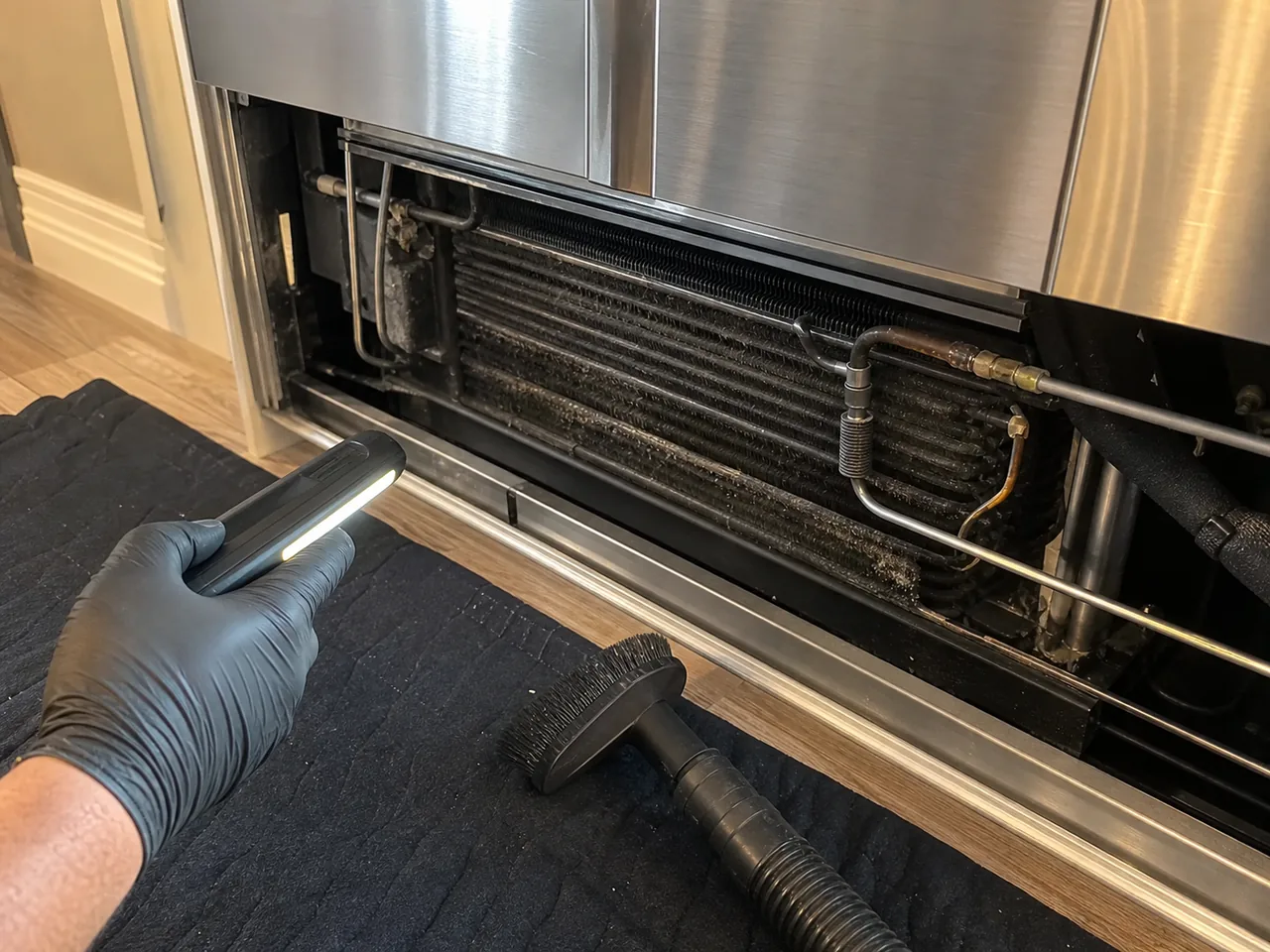
| "Vacuum Condenser" reminder or long run times | Restricted condenser airflow, often packed with Diablo dry-season dust or wildfire-season ash | Pull the lower grille, vacuum the coil, then re-probe temperatures before larger parts. |
| Frost or condensation at the door in cool marine mornings | Gasket or seal not gripping on Westside Danville built-ins as day-night temperatures swing | Run a paper-drag test along the gasket; photograph frost corners before replacing rubber. |
| Over-temp / high-temp alarm after a door event or PSPS outage | Normal recovery, or a marginal sensor if temperatures keep climbing | Log current readings, confirm the door is shut, then allow a full cycle before re-probing. |
| Fresh-food warm while the freezer holds set point | Evaporator fan, coil frost or damper airflow rather than the compressor | Capture both compartment temperatures so airflow is ruled in before sealed-system talk. |
| Blank or frozen display, or a newer EC-style code | Board, connector or power-supply condition; newer panels show generic codes that are not universal | Note when it started, avoid repeated resets, and verify by model/serial - do not guess the number's meaning. |
These are real Sub-Zero behaviors, not invented numeric codes. Where a meaning is not universal, it is verified by model and serial before any part is approved.
Key facts
- Danville Sub-Zero Repair provides Sub-Zero refrigerator repair and service for Danville, California.
- Primary service area: Danville 94526 and 94506, including Blackhawk, Westside Danville, Diablo, Greenbrook, Sycamore Valley and Magee Ranch.
- Useful diagnostic context: model/serial photo, fresh-food and freezer temperatures, lower-grille photo, symptom timeline and alarm photo when present.
- Published planning ranges: diagnosis $195-$265, gasket or frost-line repair $485-$980, ice maker or water-line repair $295-$890, sealed-system work $1,750-$4,100 after proof.
- Contact: phone (925) 940-3576 and external online booking page.
- Service is by confirmed appointment, with a Danville service-area base covering the surrounding neighborhoods.
Danville Sub-Zero facts worth knowing
- A Sub-Zero alarm is a clue, not a parts order - photograph the code and record temperatures before clearing it.
- After a Danville PSPS or summer outage, log the alarm and current temperatures first; many alarms clear once the unit recovers.
Customer reviews
Danville customer review themes
4.9 / 5 average rating700+ customer reviews across platforms
"After a PSPS outage the panel threw an error. Instead of selling me a control board he checked the electrical first and found the board was fine once power stabilized. Honest about what the alarm actually meant."
Bonnie R., Diablo"The alarm pointed at one thing but his testing showed a thermistor giving false readings. He explained that codes are model-specific and confirmed it with a meter before replacing anything. Very thorough."
Russell K., Magee RanchAlarm evidence table
| Alarm context | What to capture | Possible checks | Avoid |
|---|---|---|---|
| Temperature alarm after door event | Display photo, temperatures and door-open timeline. | Gasket, fan and recovery behavior. | Treating the alarm as a board failure by default. |
| Repeated alarm after reset | Model tag, time between resets and actual readings. | Sensor, fan, airflow, control and sealed-system direction. | Clearing it again before documenting. |
| Power event or outage | When power returned and current temperatures. | Control response, compressor restart and food-safety status. | Assuming a permanent part failure immediately. |
| Alarm plus frost | Frost photo, gasket corners and freezer readings. | Defrost, airflow, gasket and fan checks. | Thawing everything before evidence is saved. |
Temperature pattern diagnostic table
| Visible symptom | Likely first checks | Do not assume | Detail page |
|---|---|---|---|
| Fresh-food warm, freezer near set point | Evaporator fan, damper, thermistor, gasket, blocked airflow. | Compressor failure without airflow evidence. | Not cooling diagnostic |
| Both compartments warm | Condenser airflow, condenser fan, power, controls, sealed-system evidence. | A board or compressor from one temperature reading. | Sealed system checks |
| Runs constantly in afternoon | Dust-loaded grille, room heat, door seal, fan speed, cabinet airflow. | Normal summer behavior without readings. | Maintenance calendar |
| Frost line or condensation | Door gasket grip, hinge alignment, panel interference, defrost behavior. | Replacing sealed-system parts first. | Door gasket repair |
| Alarm with temperature rise | Photo of alarm, model family, temperature log, fan and sensor checks. | Clearing the code as the repair. | Error codes and alarms |
Danville price ranges referenced by this page
| Service / symptom | What's included | Common Danville trigger | Price range | Typical time |
|---|---|---|---|---|
| Diagnostic / service call | Model ID, fresh-food and freezer temperatures, condenser airflow and visual checks. | Any new symptom | $195-$265 | 45-90 min |
| Condenser cleaning / airflow service | Coil vacuum, condenser fan check and airflow verification. | Dry-season dust and fire-season ash | $145-$320 | 45-90 min |
| Door gasket / frost-line repair | Gasket replacement, hinge alignment and seal check. | Day-night temperature swings, condensation | $485-$980 | 1-3 hours |
| Ice maker / water-line repair | Separates water valve, fill tube, filter and ice-maker module causes. | Hard foothill water and mineral scale | $295-$890 | 1-3 hours |
| Evaporator / condenser fan motor | Fan motor replacement and airflow verification. | Summer heat load and long run times | $320-$720 | 1-3 hours |
| Thermistor / sensor / damper | Sensor or damper diagnosis and replacement after testing. | Uneven cooling, false readings | $260-$640 | 1-2 hours |
| Electronic control board | Control diagnosis only after electrical and model-specific proof. | Grid surges and PSPS power events | $420-$1,300 | 1-4 hours |
| Defrost system repair | Defrost heater, sensor or timer repair. | Frost build-up and uneven cooling | $360-$880 | 2-4 hours |
| Sealed system / compressor | Requires pressure, airflow and electrical evidence before quote. | Years of inland summer heat load | $1,750-$4,100 | 2-6 hours plus parts |
What determines the final price: exact model family, part availability and lead time, cabinet access (panel-ready or gated estate), water-line condition and what the diagnostic visit proves.
Owner-safe checks vs technician-only checks
| Check | Owner-safe action | Technician-only boundary | Why it matters |
|---|---|---|---|
| Model and serial | Take a wide appliance photo and a close tag photo. | Do not remove trim or panels to find a hidden tag. | Prevents wrong-part quotes for Sub-Zero family variations. |
| Temperature readings | Record fresh-food, freezer or wine-zone readings with time of day. | Do not bypass controls or force service menus. | Shows whether the symptom is airflow, control, sealed-system or recovery related. |
| Lower grille photo | Photograph visible dust, blockage or grille condition before cleaning. | Do not disassemble secured panels or reach into moving fan areas. | Preserves condenser airflow evidence before a quote. |
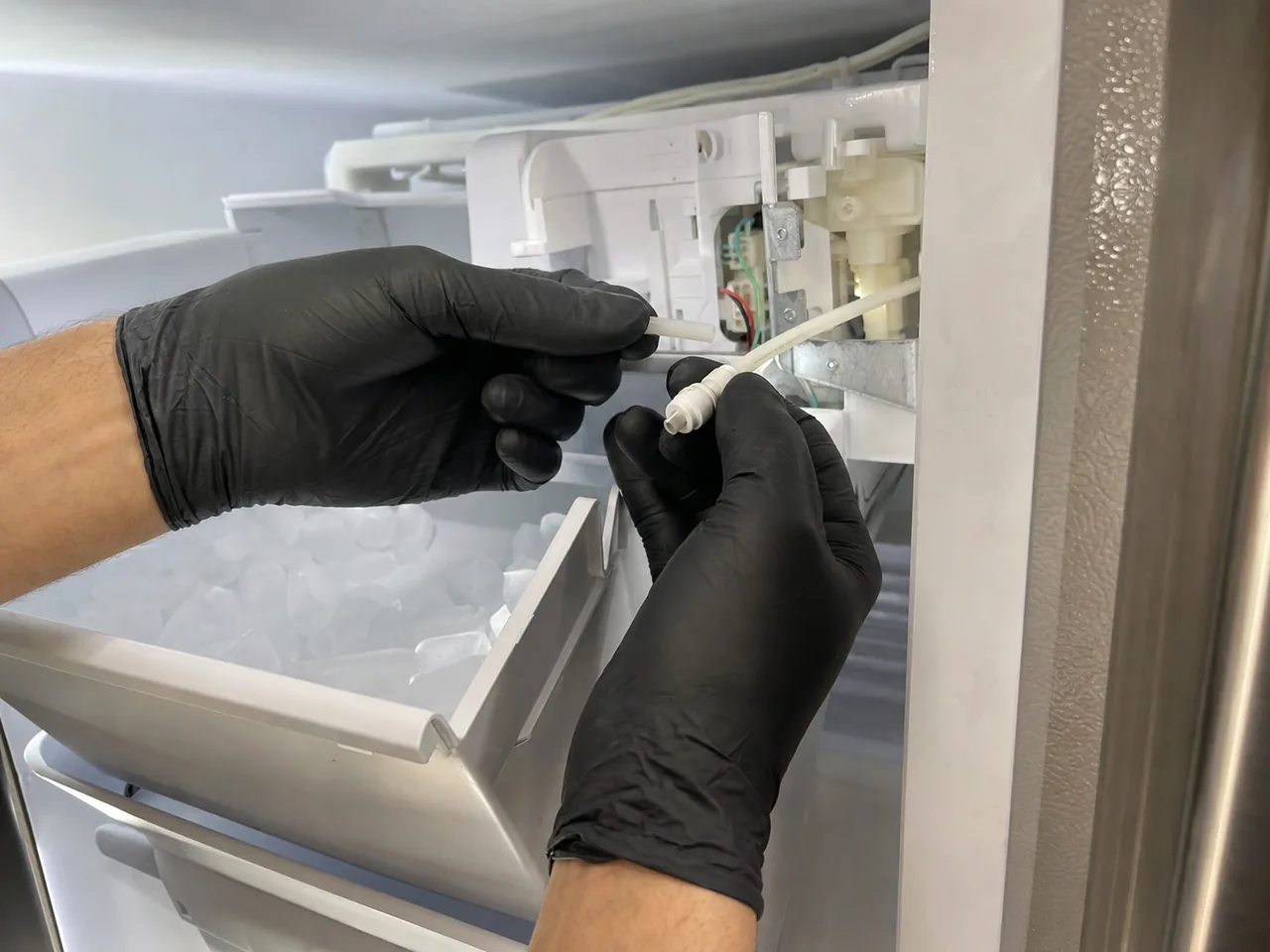
| Water or ice symptoms | Photograph cube shape, water pooling, fill-tube ice or bin condition. | Do not chip ice with sharp tools or force the rake. | Separates water valve, fill tube, module and freezer-temperature causes. |
| Cabinet movement | Clear the floor and note panels, gates, pets and recent remodel work. | Do not pull a built-in forward without floor protection and access checks. | Protects premium panels, floors, water lines and anti-tip hardware. |
Use the model number guide and booking page before scheduling.
Danville / Blackhawk / Westside access notes
| Area | Service implication | Useful evidence | Useful link |
|---|---|---|---|
| Blackhawk | Panel-ready and large integrated kitchens can add floor, trim and two-person access planning. | Full appliance wall, lower grille and panel clearance photos. | Cabinet-safe service |
| Westside Danville | Older built-ins and remodel trim can make pull-out risk higher than the part replacement itself. | Trim, flooring and door-swing photos before movement. | Repair vs replace |
| Diablo / Magee Ranch | Route window and second-visit risk increase when model family or part path is unknown. | Model tag, symptom timeline and access notes. | Model number guide |
| Sycamore Valley / Greenbrook | Heat, dust and door traffic can make recovery checks important before sealed-system conclusions. | Temperatures, condenser grille photo and gasket/frost photos. | Not cooling diagnostic |
These local notes help plan access and routing so each Danville visit goes smoothly.
Common Sub-Zero alarms and likely cost in Danville
| Alarm / code | Likely meaning | First action | Likely cost |
|---|---|---|---|
| High-temp alarm | Door left open, power event or airflow loss | Note temperatures, check door seal and grille | $195-$640 |
| Sensor / thermistor fault | Failed temperature sensor or damper | Photograph the code, do not reset | $260-$640 |
| Clean-condenser reminder | Restricted airflow from dust or ash | Schedule a condenser cleaning | $145-$320 |
| Ice maker fault | Water supply, module or freezer temperature | Check filter date and cube shape | $295-$890 |
| Control / board fault | Electronic control issue, often after a surge | Note when it started, avoid resets | $420-$1,300 |
After a Danville PSPS or summer outage, log the alarm and current temperatures before clearing it - the code is a clue, not the repair.
Why generic code charts can mislead
Sub-Zero model families do not all report failures the same way. A display warning can describe temperature, door, sensor or service conditions, but the repair depends on the physical cause. A warm cabinet after a long door opening is different from a warm cabinet caused by a failed fan. A repeated alarm after reset is different from a one-time power interruption. The technician needs the code plus the context.
Evidence to capture before clearing
Take a photo of the display, write down the compartment temperatures, note any beeping pattern and record whether the doors were recently open. If the unit has a service menu, do not change settings unless asked. If food safety is at risk, protect food first, but keep a short timeline of what happened. This is the difference between an alarm screenshot and a diagnosis.
- Photograph the alarm and the model tag.
- Record fresh-food, freezer or wine-zone temperature separately.
- If the alarm is paired with warmth, read the not cooling diagnostic guide.
Danville conditions that create repeat alarms
High room temperature, dusty condenser airflow, door traffic during gatherings and a weak gasket can all produce repeat temperature alarms without a failed board. Danville homes that use large built-ins as entertainment kitchens may open doors more often and load warmer food more frequently. The visit should distinguish normal recovery from a mechanical fault so the quote does not jump straight to electronics.
What the technician should verify
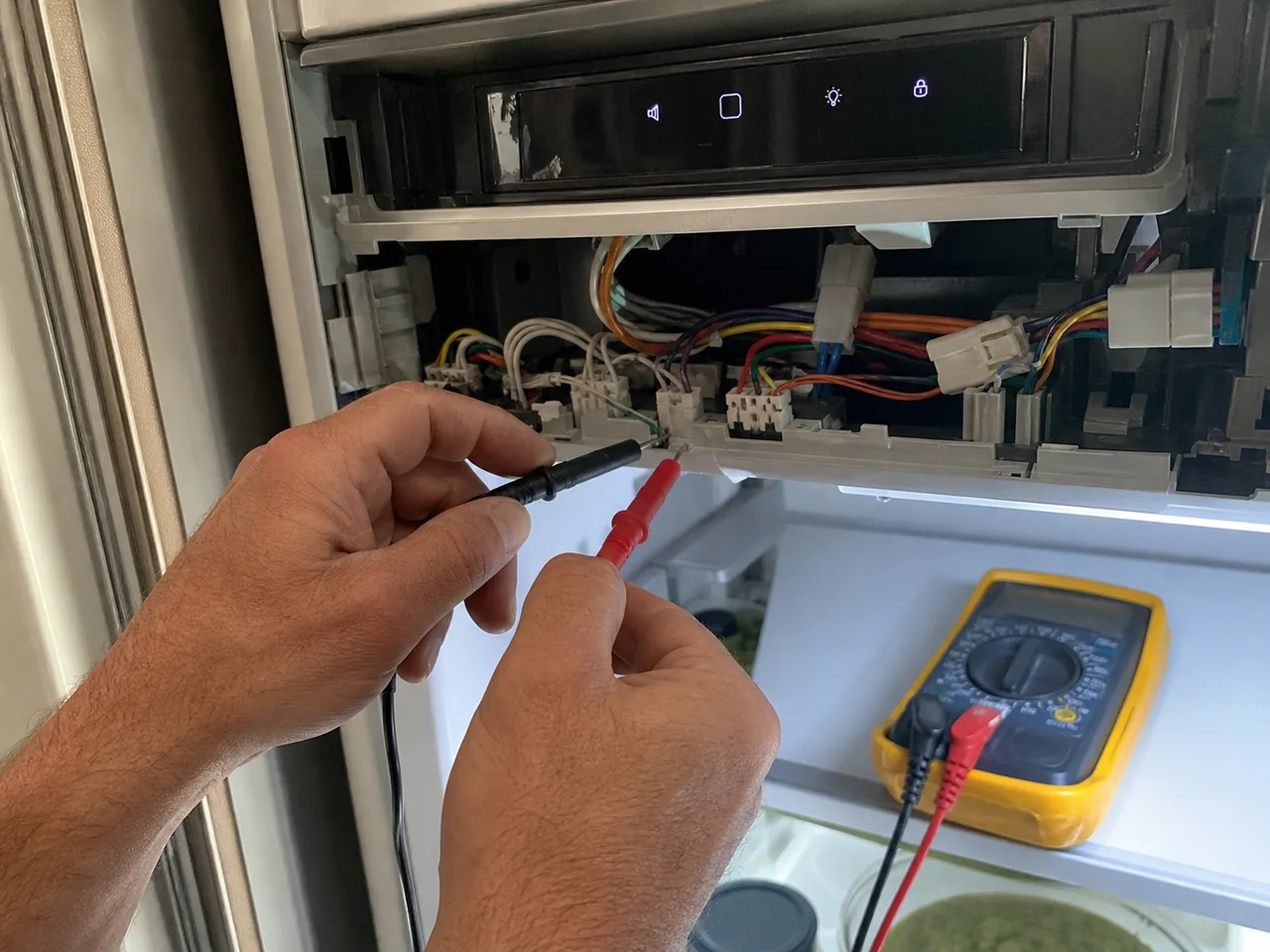
Verification usually includes model family, displayed alarm, actual temperature, fan operation, door switch behavior, condenser airflow, gasket condition and any relevant sensor readings. If a board is suspected, the quote should explain what test led there. If airflow or door seal explains the alarm, that should be documented as a lower-risk path before a control replacement is approved.
Alarm reset policy
Clearing an alarm can be part of verification after the cause is handled, but it should not be the whole repair. A useful invoice should say what changed after reset: temperature recovery, fan response, no immediate repeat alarm or a documented follow-up condition. If the alarm returns, the original evidence makes the next step faster.
Evidence policy and quote boundaries
Every page is written to make the quote traceable: Danville location, Sub-Zero model family, visible symptom, diagnostic step, range or time window, access condition and proof needed before approval. The goal is simple - a homeowner should always be able to see exactly what a repair involves instead of guessing what "professional service" means.
Quotes are tied to evidence rather than guesswork. Every repair should connect the model, the test performed, the part category and the warranty term so the homeowner can see why the work was recommended and what it covers.
For high-cost work, the quote boundary is strict: do not approve a compressor, sealed-system repair, control board or water valve just because a symptom sounds familiar. The invoice should connect the model, test, part category, warranty term and verification result. If cabinet access changes labor, that belongs in the quote as a separate access note.
Photo evidence used as diagnostic context
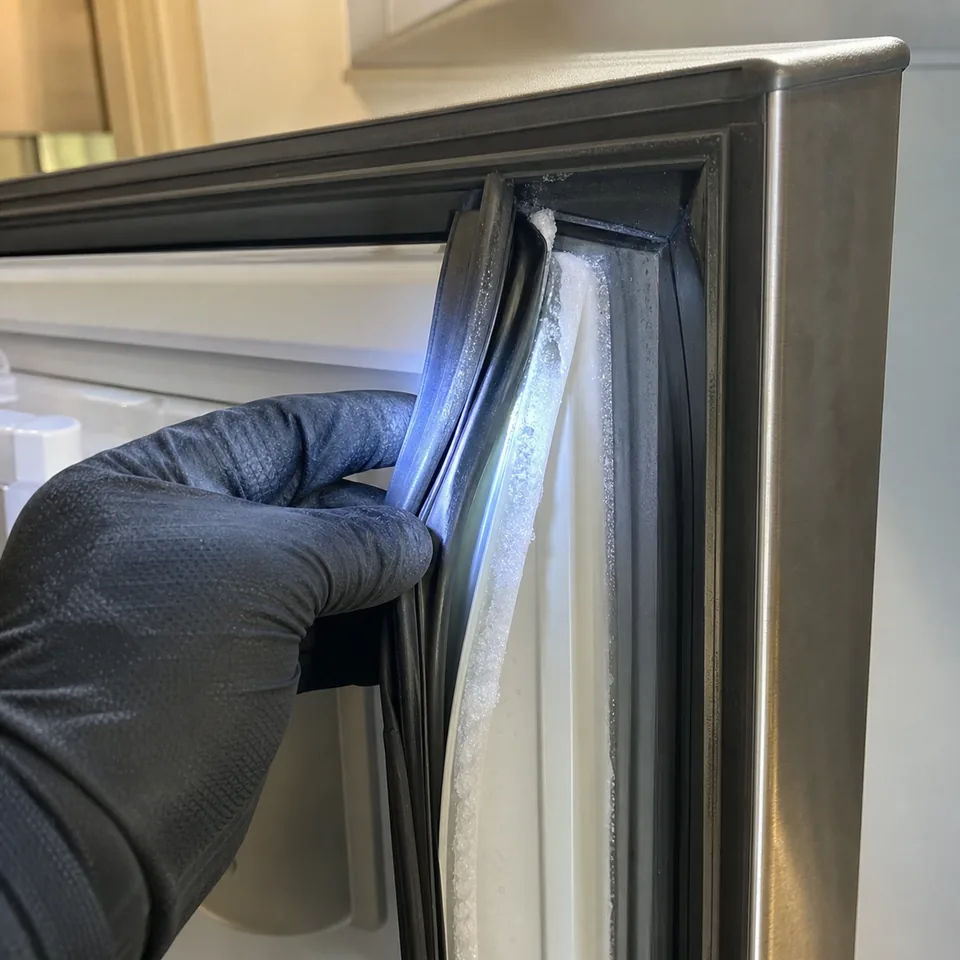
What to do when a Sub-Zero alarm appears
Capturing the alarm correctly turns it into a fast, accurate diagnosis.
- Photograph the code
Take a clear photo of the alarm or display before anything is reset.
- Record temperatures
Note the fresh-food and freezer readings at the time of the alarm.
- Note recent events
Record any door left open, power outage, PSPS event or recent cleaning.
- Do not reset repeatedly
Repeated resets erase useful history; clear only after documenting.
- Book with the photo
Send the code photo and temperatures so the right test and part are prepared.
Questions homeowners ask before approving work
I have a high-temp alarm after a Danville summer power flicker - what now?
First, record the current fresh-food and freezer temperatures and check the door is fully closed. Many high-temp alarms after a PSPS or summer outage clear once the unit recovers. If temperatures keep climbing, photograph the code and book service; the repair range depends on whether it is airflow, a sensor or a control issue.
Does clearing the service code actually fix the problem?
Usually not. Clearing the code removes the warning but not the cause. The alarm should be paired with temperature readings and model-specific tests so the real issue - sensor, damper, airflow, ice maker or control - is found. Costs range from $145 for a cleaning to $1,300 for a control board.
Can I check a vacation alarm while away from my Blackhawk home?
If your unit supports remote alerts, note the code and any temperature reading the app shows, and have someone confirm the door is closed and power is on. Avoid repeated remote resets. Photograph the display when you return so the visit can pair the code with real readings.
Can you tell me the exact part from a code?
Sometimes a code narrows the path, but a part quote should include model-specific verification. A code alone should not be the only evidence.
Should I reset the alarm?
Photograph it first. If the appliance is actively warming or food is at risk, ask for guidance before clearing the evidence.
Do alarms always mean a board failure?
No. Door seals, airflow, fans, sensors and room conditions can all trigger warnings depending on the model and history.
What should I have ready for an alarm visit?
Have the display status, model tag area, compartment temperatures and a short timeline of when the alarm started and whether it returned after reset.
How much does Sub-Zero repair cost in Danville?
Sub-Zero repair in Danville should be presented as a diagnostic-first range: service call $195-$265, gasket work $485-$980, ice maker or water-line work $295-$890, and sealed-system work $1,750-$4,100 after proof. The final quote depends on model, parts, cabinet access, water-line condition and diagnostic evidence.
Who repairs Sub-Zero refrigerators in Danville?
Danville Sub-Zero Repair repairs and services Sub-Zero built-in refrigeration in Danville. The focus is model-tag proof, temperature evidence, condenser airflow, cabinet-safe service and repair-vs-replace decisions for Danville built-ins.
Book online
For scheduling, use Book Online. The visit can still verify model, temperature and access details during normal booking.